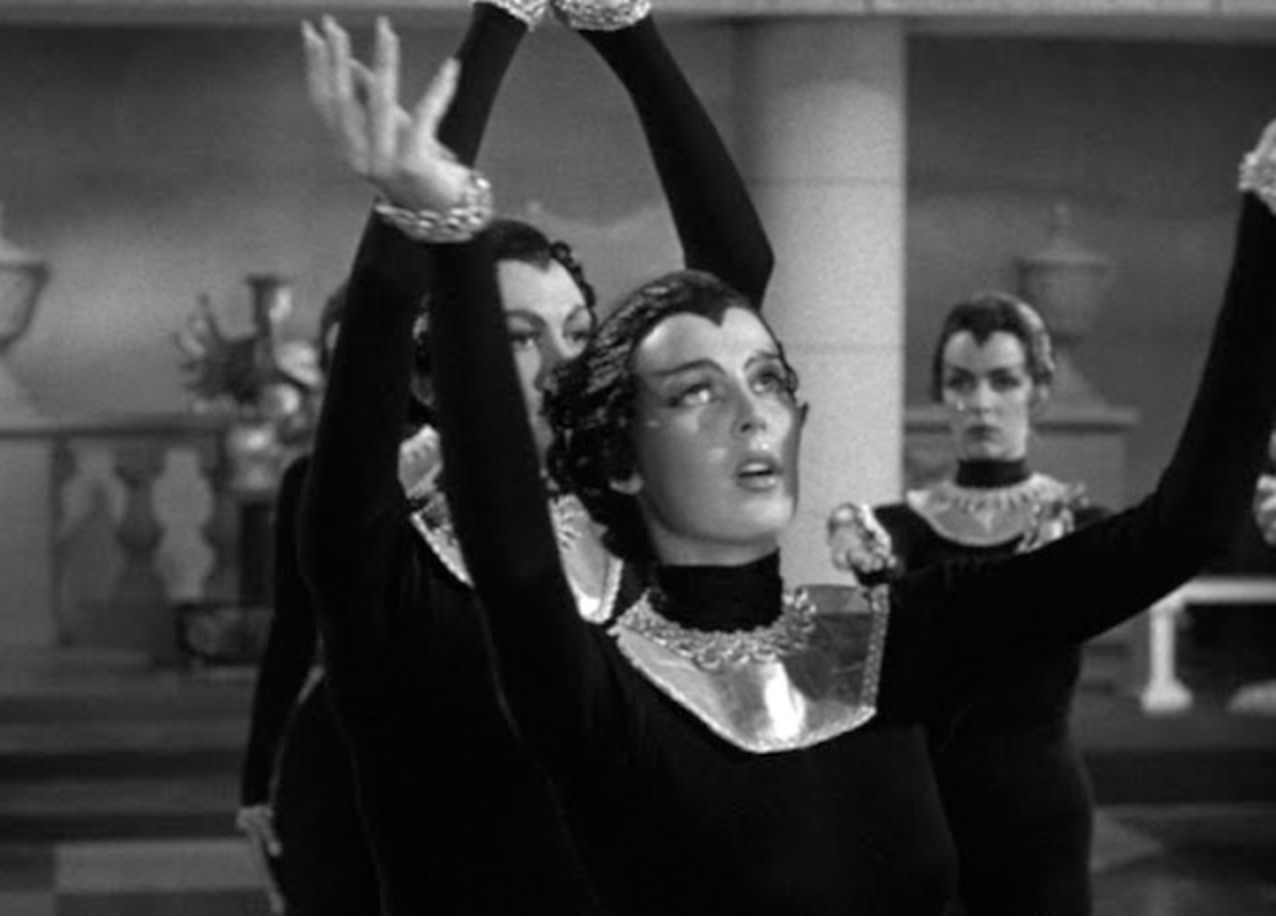


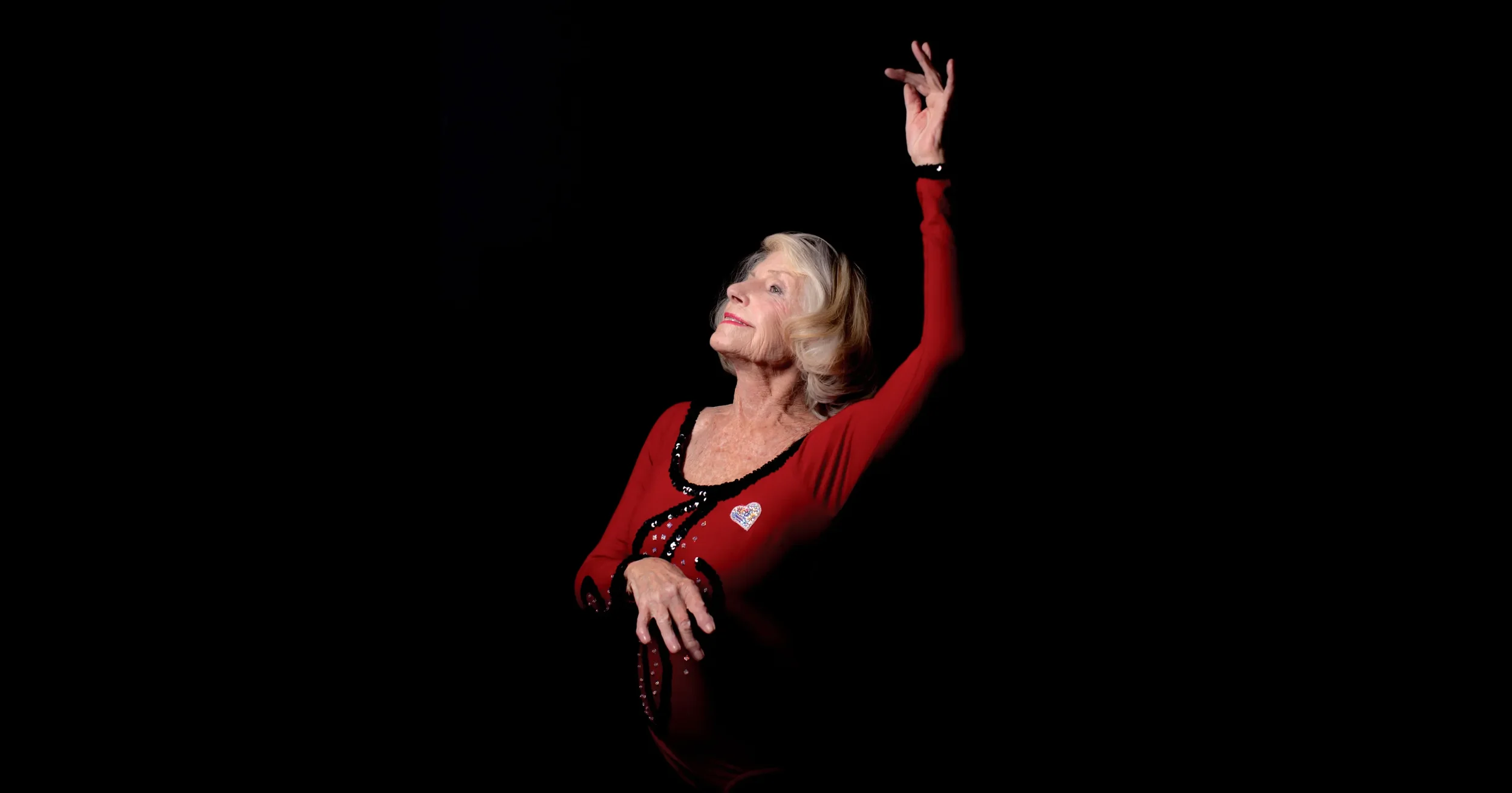

When I think about embracing life to its fullest, Elizabeth "Bunny" Herring has been a role model of mine in this lifetime. I recently learned she passed away at age 99. When I met Bunny, she was early in her career on the trapeze, with her first performance at 80 and her retirement performance at age 90. More people should know about her, and this is a reminder that everyone has their stories. We just need to listen.
The following was written in 2016 and adapted from a 2010 interview and blog posts for The Mind Body Moderate.
Elizabeth "Bunny" Herring's favorite tattoo is her first, a gift to herself on her 80th birthday. It's a Latin scroll around her right ankle - her boarding school motto 'esse quam videri'. To be rather than seem. She's since accumulated several others, some still hidden from her children, but this is the one she identifies with most strongly and gave her the edge on acceptance amongst the prison population.
This is a story about growing older. When I met Bunny, I'd been a Pilates instructor for over ten years, though to be perfectly candid, I've never liked sweating or exercise in general. What I did enjoy was feeling better when I moved and danced. It's been part of my life since I was three. As a Pilates teacher, I loved reading the body and helping people find ways to move and feel grounded in themselves. When I enrolled in a trapeze class at a circus school, looking back, it was really about exploring playful ways into movement, something further from exercise and routine, further from "the shoulds" of aging well. Why can't we continue to hold on to playfulness and curiosity as forms of resilience as we age?
Turns out that I was the oldest in my beginner trapeze class. In the first lesson, we sat in a circle and announced our names, ages, and something we liked. 12-year-old Ruby and I both liked ice cream. The closest person in age to me was 13 years younger. It was humbling. Also humbling was the fact that the circus school was a plexiglass-enclosed, one-ring circus in a museum. Showing off my non-skills to hordes of children with noses pressed against the glass, and their parents, heads cocked, eyeing with curiosity. I imagined their thoughts went something like: "Maybe she's the teacher? But she's so bad. She must be taking the class. Ah, how awkward."
I never knew I could sweat so much from fear. My palms were like waterworks every time I looked at the ropes. There were days when my body was a mass of soreness that could barely climb out of bed, but I walked a little taller feeling like I was doing something different, rather than aimlessly gliding life away on a stationary bike to nowhere. I was an elitist of remedial trapeze skills.
"I must be the oldest student you have," I commented to my instructor.
She shook her head. "Nope. You're not even close. Bunny is my oldest pupil, and I guess she's 82 by now".
That was not the answer I was expecting. "Wow. She must really be something."
"You have no idea."
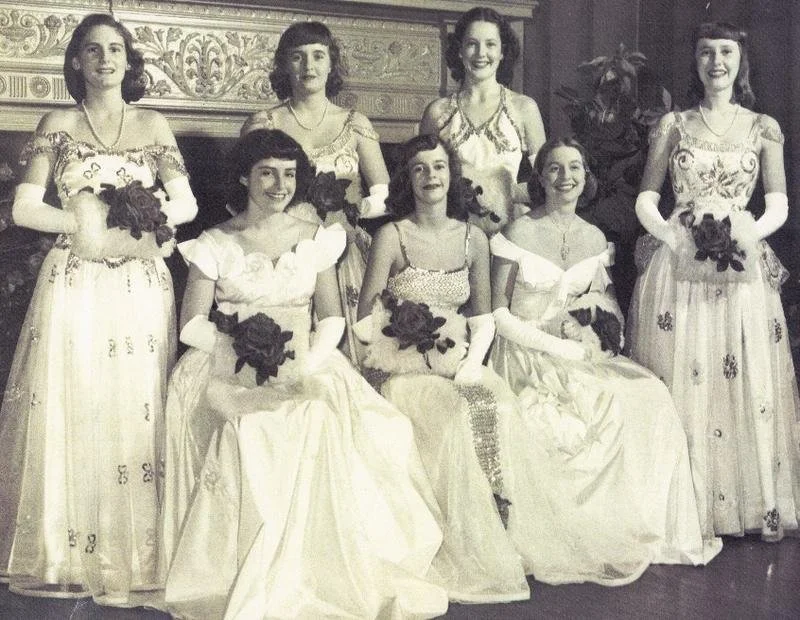
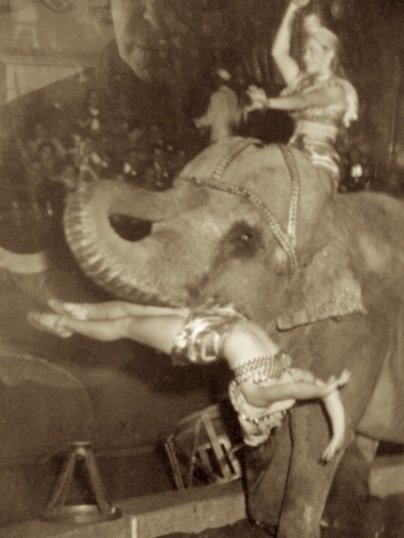
Bunny, seated front, 1947
I resolved to meet this woman, whose very name pulverized my insecurities into a pile of dust.
As a young girl from a well-to-do St. Louis family, Elizabeth "Bunny" Herring ran away and joined the circus. After lengthy drama, she was allowed to stay, promising her parents she would never perform on the trapeze, but by age 79, with her parents both long gone, she figured, "eh, why not?" Bunny performed on the trapeze for her 80th birthday to raise money for charity. She's been doing it ever since.
Using a new blog project as my foray, I interviewed Bunny one afternoon about aging, fitness, and her time with the circus.
"Oh! Hello Dear! SO good to see you. Please come in, and I'll give you the tour."
In front of me was a five-foot, small-framed woman. Her bobbed, blonde hair had a casual elegance. I was unable to determine if it was really hers. Her wide blue eyes sparkled like a teenager discovering some newfound freedom in the world. Her smile was that of a performer - made to make you feel good about yourself.
As though beginning a performance without much introduction, she began showing me around her condo's themed rooms – the circus-tent dining room, the opera guestroom, and even the burlesque bathroom – although she admitted the boa trim wasn't working out so well given the humidity. After jumps through a hoop from her dachshund Siegfried, we finally sat down and I got to ask my questions. "How do you stay in such great shape? What's your secret?"
"Hmmm. Let's see…I try to go to the Y a few times a week, and I do my old ballet stretches - plies and grand plies, that kind of thing. I used to ride horses. But really, I'm pretty lazy these days."
"I can't imagine that! Anything else?"
"No. Not really. That's about it."
I'm no Diane Sawyer, and although I thought there must be more, I didn't push. There were many other stories she wanted to tell, and grateful for her time, I was ready to listen. We talked about drinking snake's blood in the night markets of Taipei, blogging, Afghanistan, and dating Marlon Brando (he had a bit of an ego, she says). We discussed her escape from The American School of Ballet in New York to join Ringling Brothers in the 1940s, and the family turmoil it caused in her affluent, Jewish family back in St. Louis. She explained the hierarchy of the circus castes: from laborers and roustabouts to animal handlers, ballet "broads" (which she was), clowns, performers, and, at the top, the execs. We talked of how she went back to school in her 60s, almost completing her PhD, but she got bored.
We talked most about her passion for performing Shakespeare with prisoners. This experience has changed her life. "It's not like dangling from an elephant's mouth! Speaking in front of an audience is scary!"
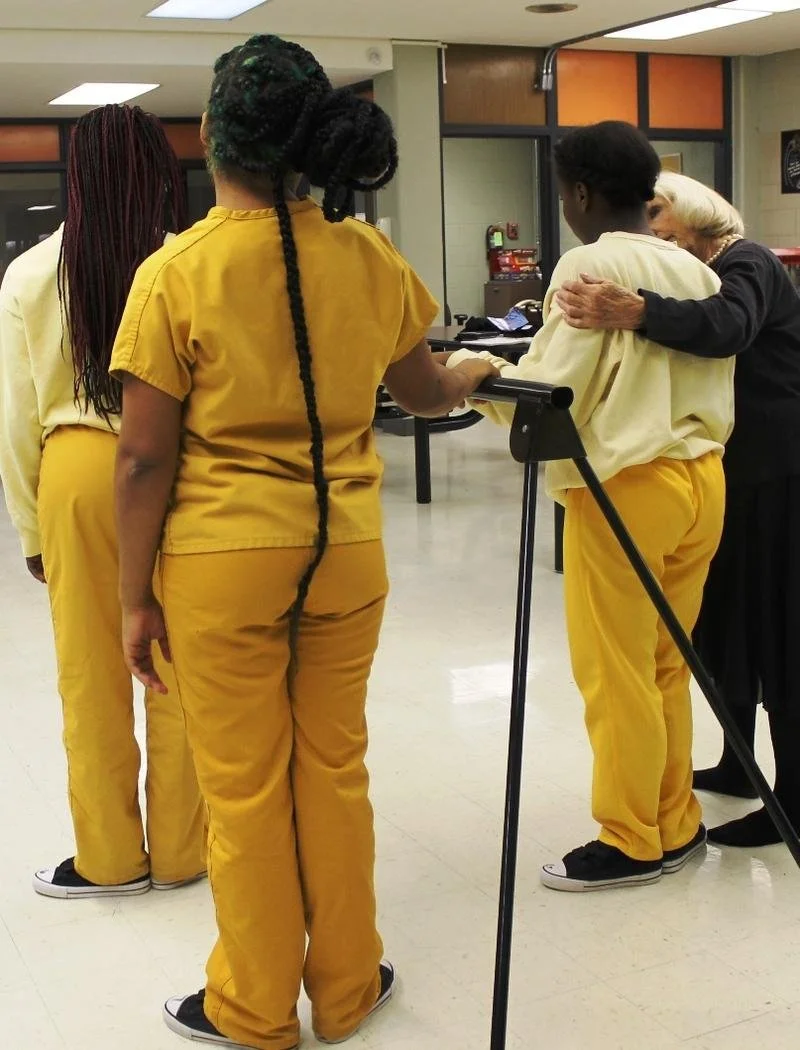
Bunny teaching ballet in a women’s prison
Apparently, Bunny has a fear of public speaking and had been conquering it in jail. For years, she taught acting, poetry, and dance to inmates in prisons and juvenile detention centers through Prison Performing Arts, a nonprofit founded by Agnes Wilcox. The performing arts work, similar to my own exploration of circus arts and play, is meant to spark intellectual curiosity and personal growth in the people involved and to offer a creative discipline with tools to aid in collaboration with others — new ways of communicating. The program also asked something of the community: that people connect with participants directly, rather than at a distance, and that support continue once someone was released, not stop the moment they walked out. The interesting thing is that Bunny would honestly tell you that there is no place she'd rather be than in prison. It was here that she was able to both offer and receive support through these artistic collaborations in dance and theatre.
It all sounded so charmed and fantastic, but of course, it never is. Prison is rough. Period. And it affects anyone who walks in those doors. There are no straight lines, not for the people incarcerated, nor for those who work there, nor for those who want to help. Her children worried about her frequently. Bunny has been known to employ formerly incarcerated friends as drivers, which has been both wonderful and, at times, shady. And for her children, she isn't always forthcoming about her latest plans and projects until after they've been carried out, such as when she began trapeze lessons in her late seventies. Bunny's life was plagued by misfortune, too. Her first love and fiancé, a clown no less, had died suddenly and tragically. Her husband of more than 50 years, a cowboy from Wyoming, had just recently passed away. And I could see the pain as she told me the story of losing her son when he was in his teens in an accident. She even recently suffered a bad knee injury from an icy sidewalk fall and was put into a nursing home. The difference with Bunny is that instead of considering this a last stop in her eighties, she chose to call it her “rehab-resort vacation”. She recuperated for several months, then went back to her own apartment and resumed driving.
None of Bunny's charmed life was in spite of the hardship, but perhaps her curiosity and ability to stay open are keys to resilience. With pitfalls and high points, Bunny never lost her curiosity for living. She's a magician, a ringleader of her own circus, weaving wonder through several acts. Like the best illusions, it's really, and truly, the stuff of everyday. Her stories are everyone's stories, perhaps she just leans into the plotlines to see where they'll take her more than the rest of us.
On a recent late-night out, I spotted her blonde bob at a St. Louis burlesque show. Her petite frame hidden under an oversized fake leopard-fur coat, a Rolling Rock in hand. Bunny was flanked by a couple of large tattooed men, triple her size and a third of her age, perhaps the kind of company her children worried about, and exactly the kind she intended to keep. I went over to say hello. It was loud, and her hearing aids couldn't withstand the noise and music. I could see her face concentrating on my words. Besides, it had been years since we spent that afternoon together, and my hair had changed from a pixie platinum to long jet-black. Perhaps she didn't recognize me. But ever-poised, Bunny looked directly into my eyes and said slowly and very sincerely, "My Dear! So very good to see you," before she floated away, her escorts shuffling behind. They were off to order another round of beers, while I, tired and having to work the next day, decided it was time to go home.
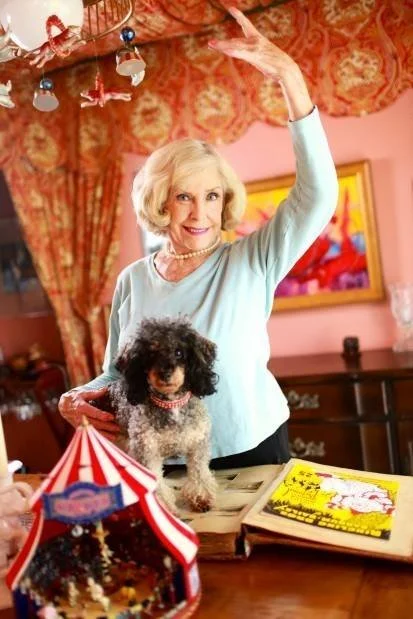
Bunny and Mimi